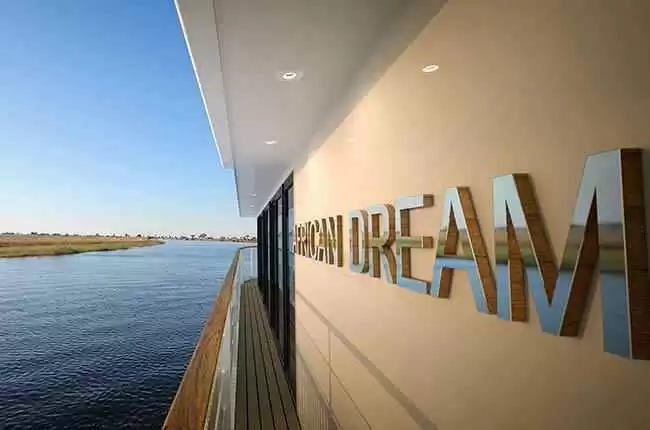
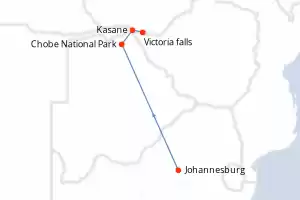
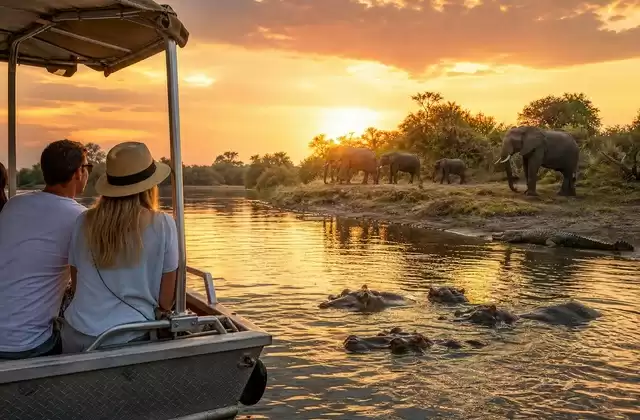
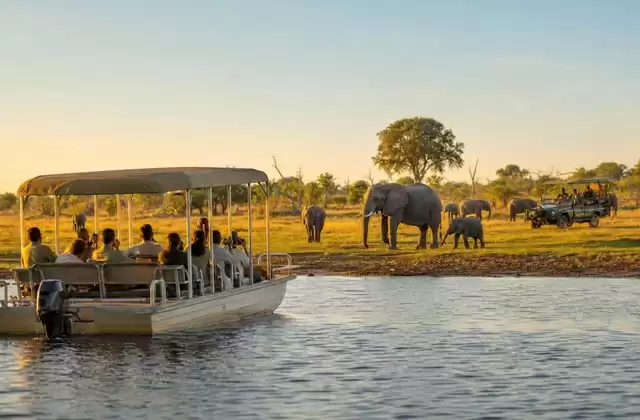
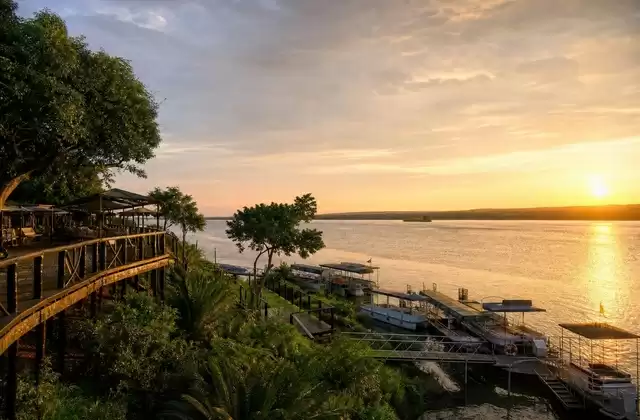
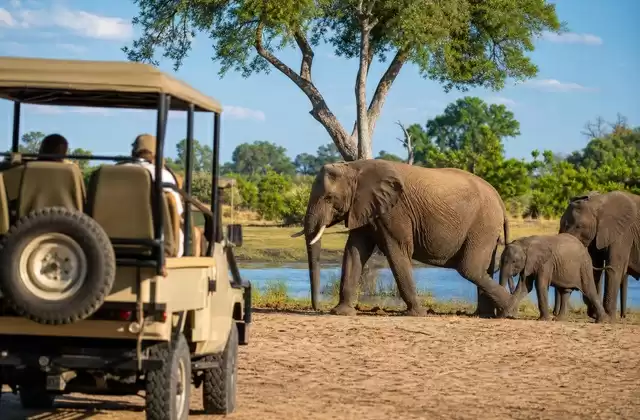
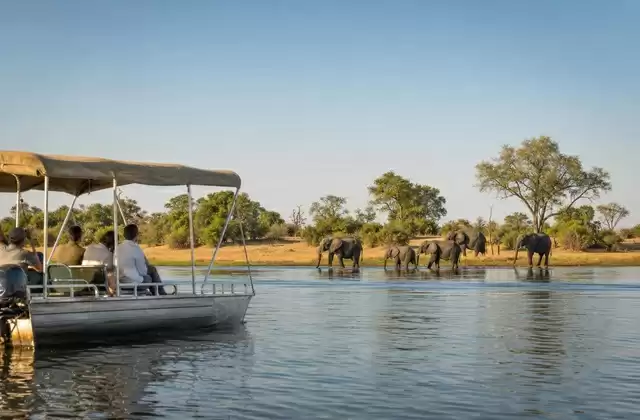
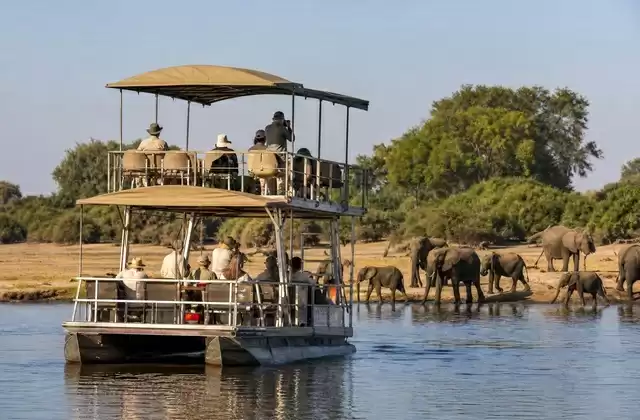
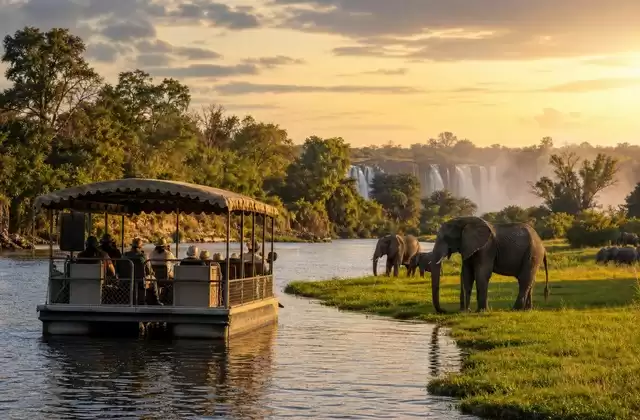
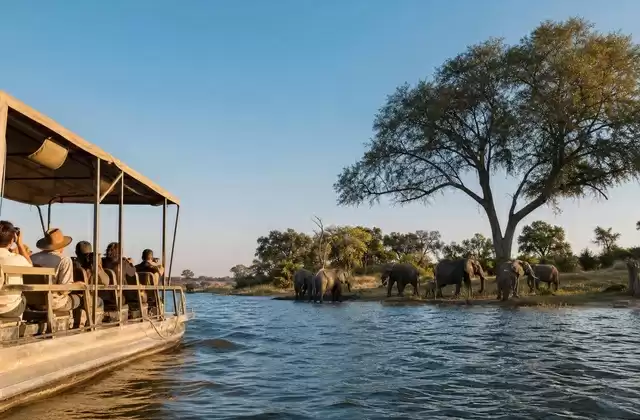
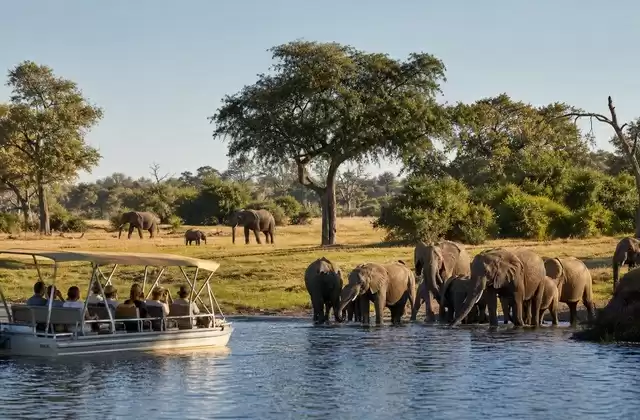
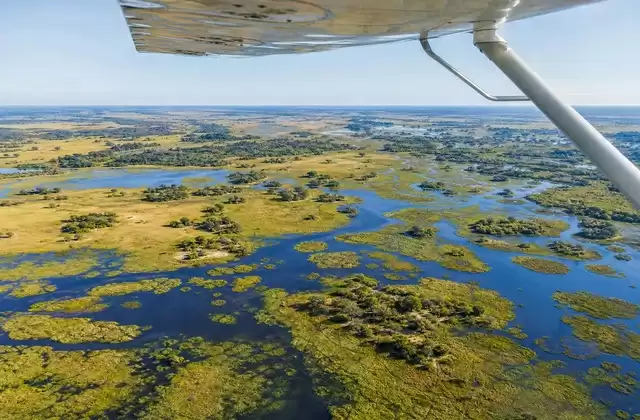
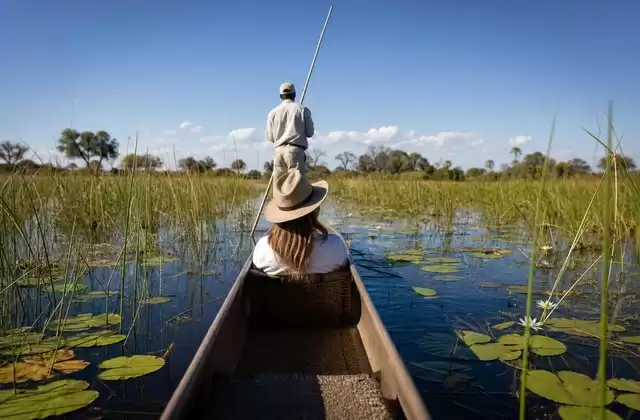
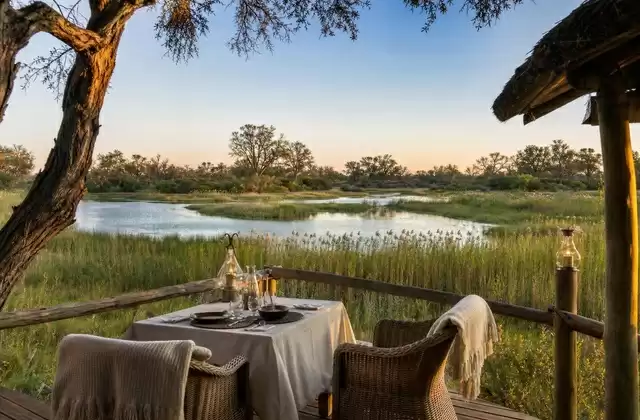
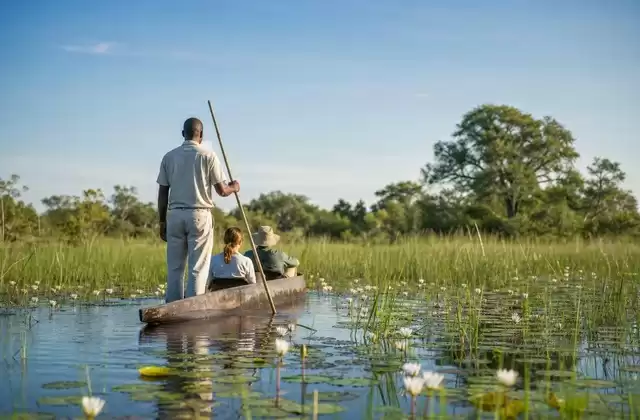
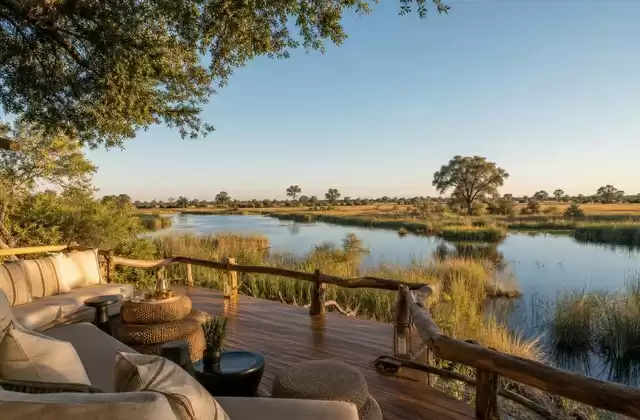
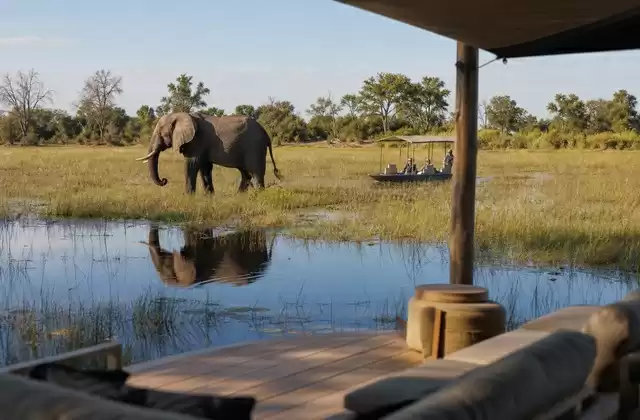
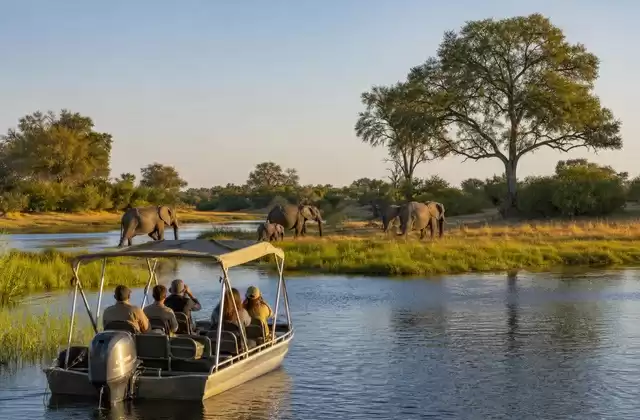
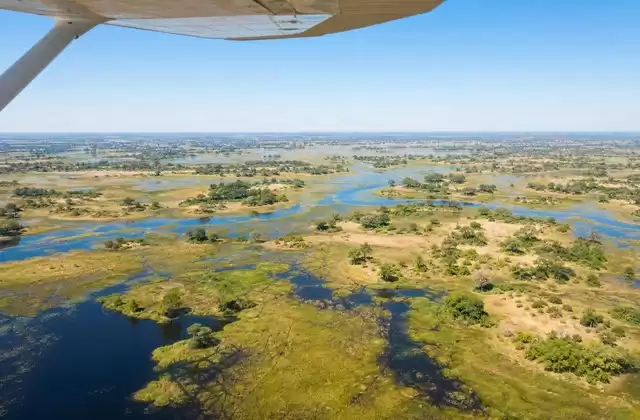
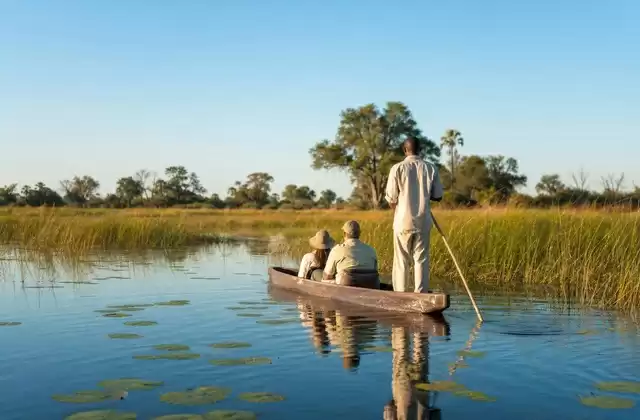
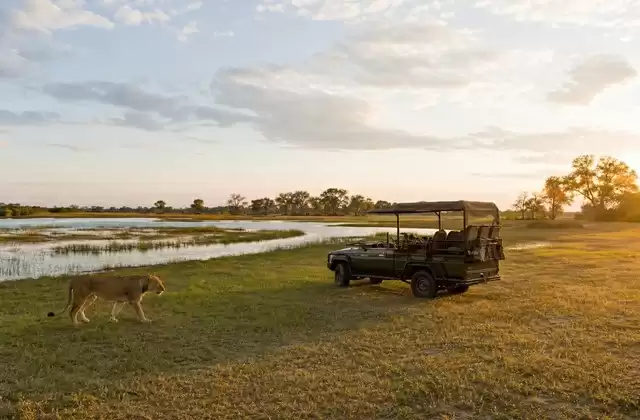
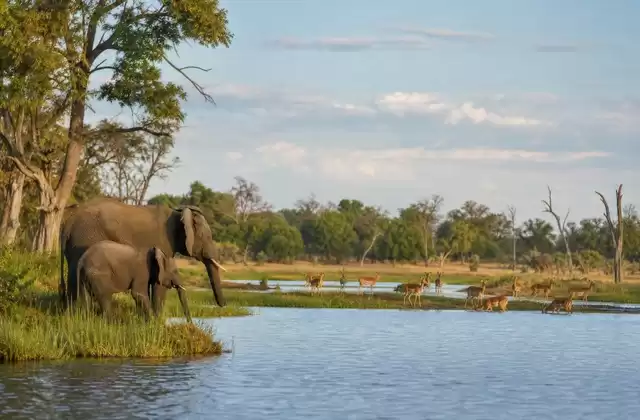
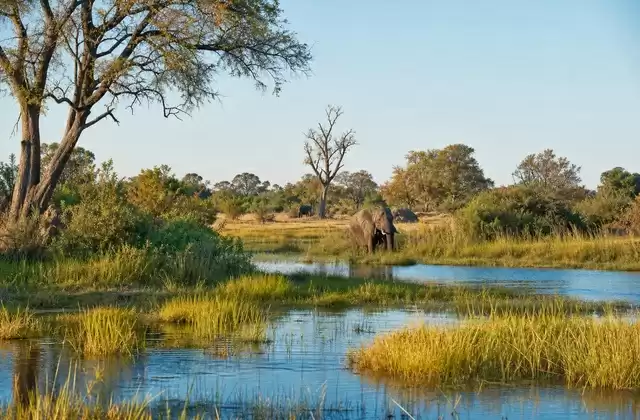
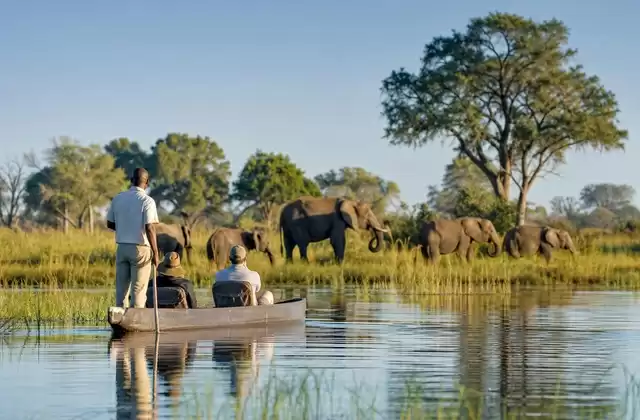
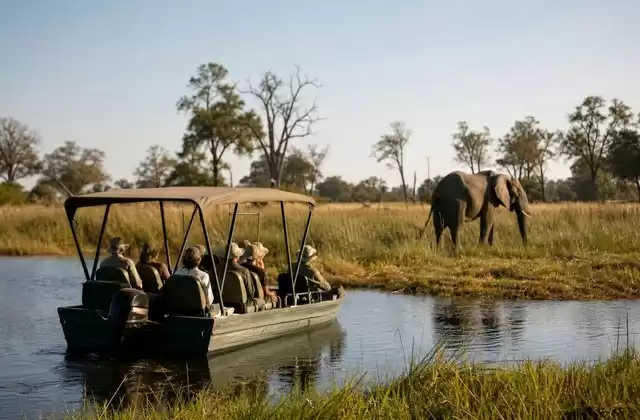
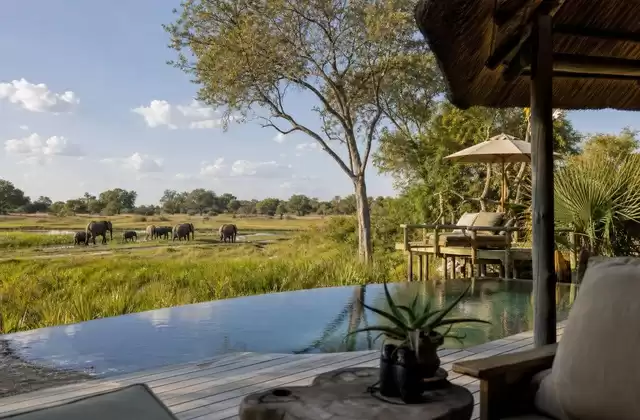
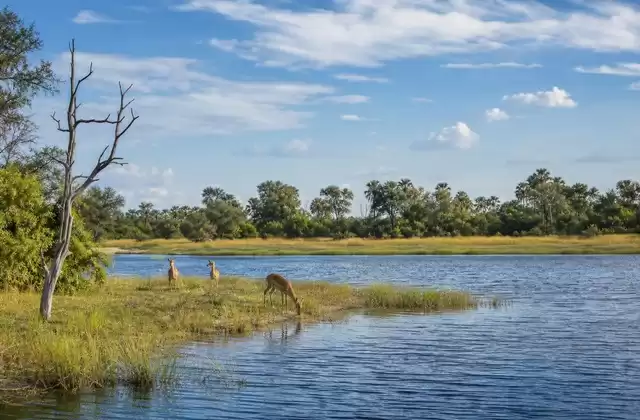
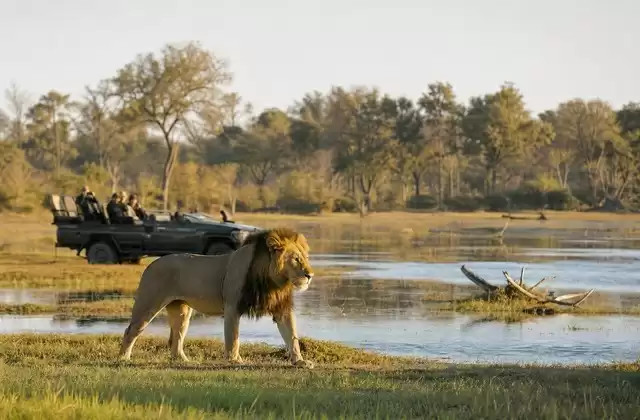
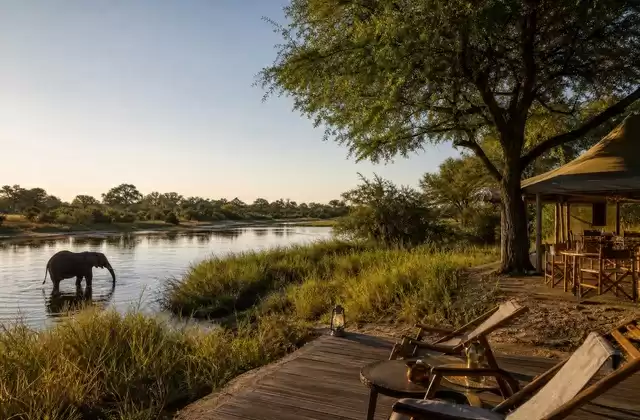
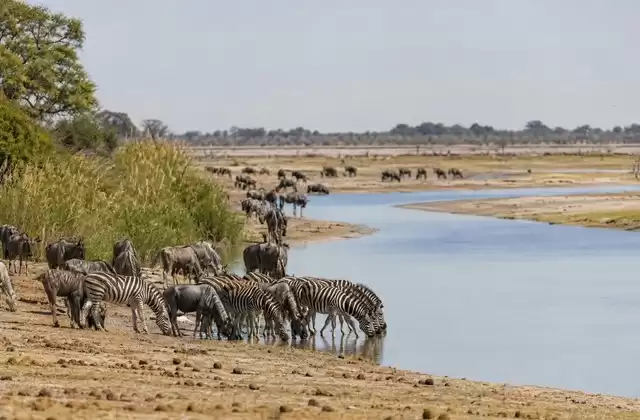
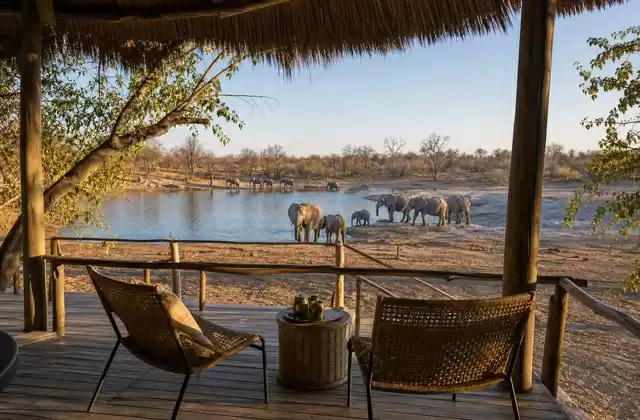
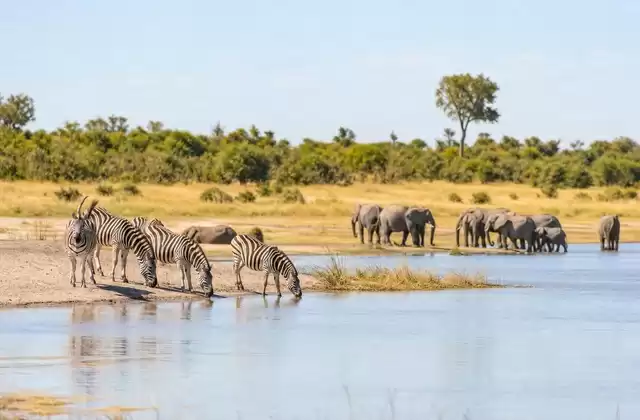
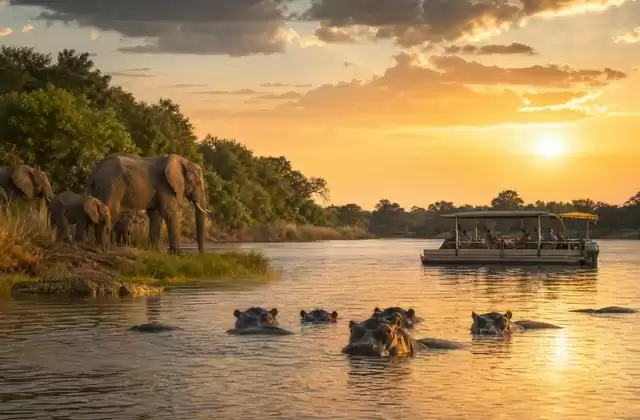
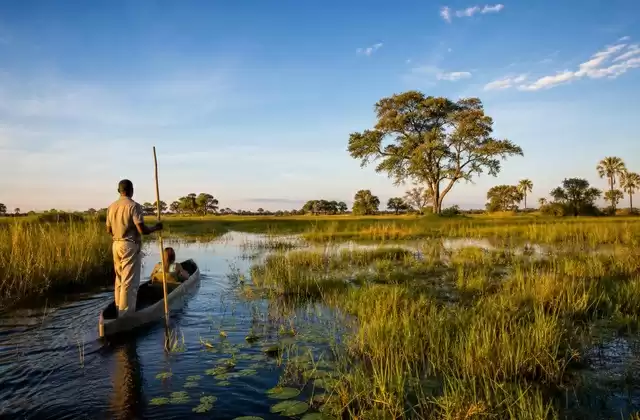
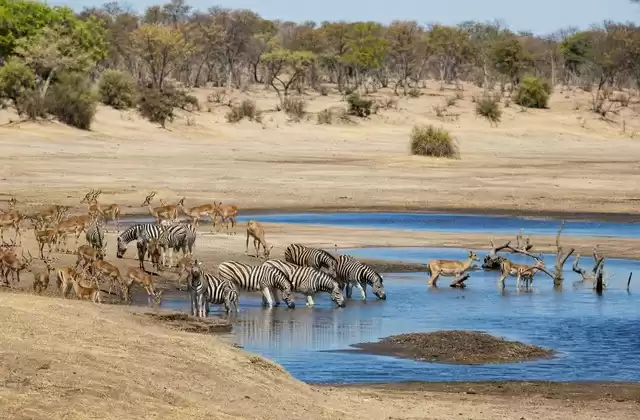
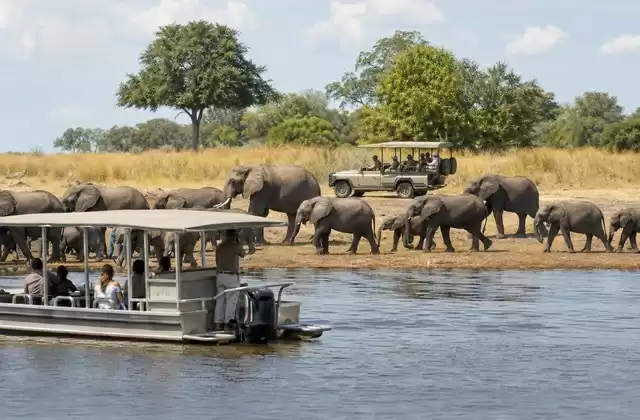
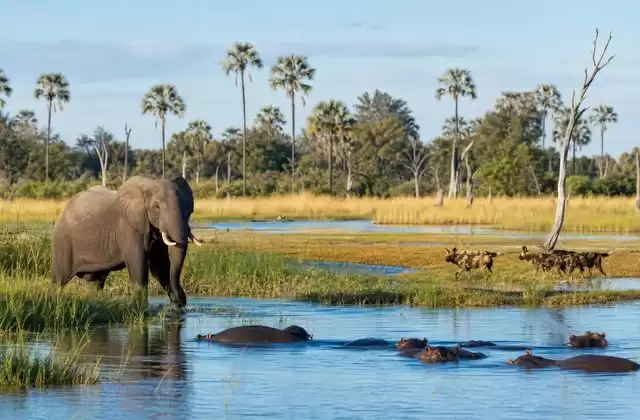
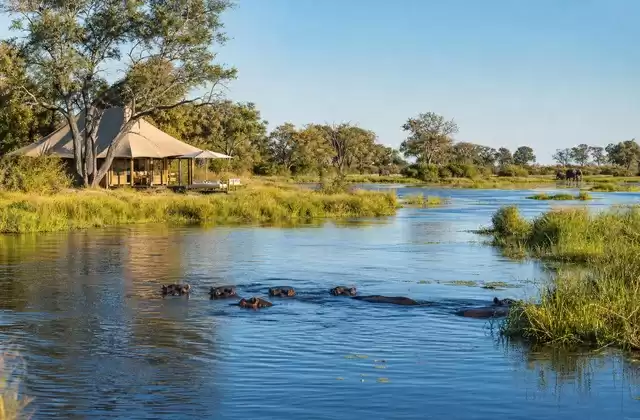
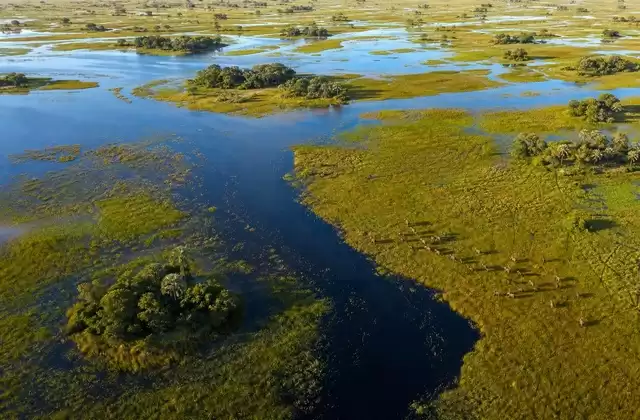
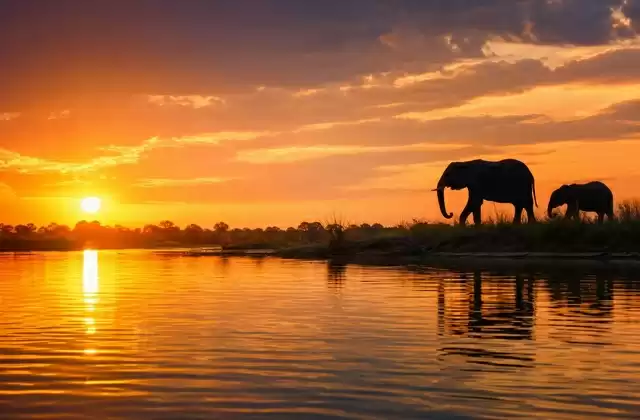
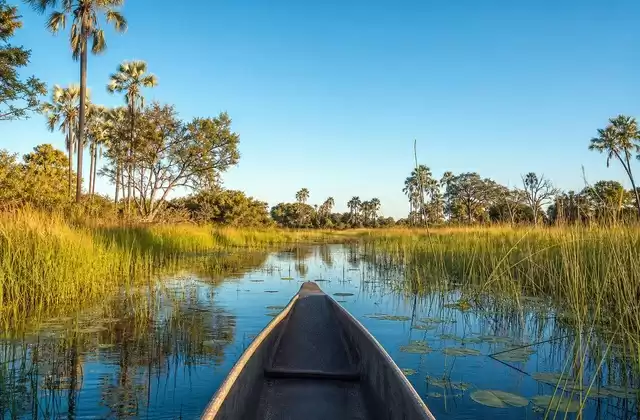
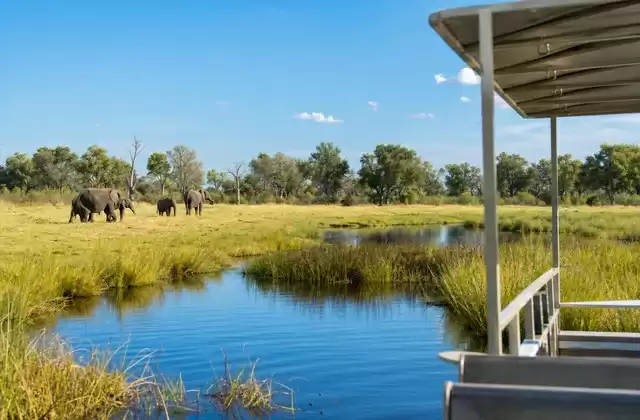
Chobe’s broad channel shapes the classic scene: tawny floodplains on one side, Namibia’s Caprivi on the other, and islands where elephants graze, drink, and sometimes swim. As the light softens, herds file to the bank while hippos surface in the shallows and crocodiles hold still on sandbars. Birdlife is constant—bee-eaters on overhangs, kingfishers on wires, African skimmers slicing the water, and fish eagles calling across the reach. Near Kazungula, the river bends toward its junction with the Zambezi, a geographic crossroads where borders meet and channels braid around low islets. West of here, the Okavango’s character is different: a land-locked delta that never reaches the sea, expanding and contracting with flood pulses to create lagoons, backchannels, and palm-dotted islands. Boat passages slip through papyrus and reedbeds; open lagoons mirror sky and distant treelines; shallow edges host red lechwe and wading birds. On quieter stretches of the panhandle, you drift beside fishing skiffs and watch for the wake of hippos moving between pools. Across this northern circuit, the appeal is unforced: long, slow waterway perspectives, reliable wildlife on the Chobe, and a shifting, island-laced wetland in the Okavango—complementary settings that make time on the river as rewarding as time on shore.

 514 8190600